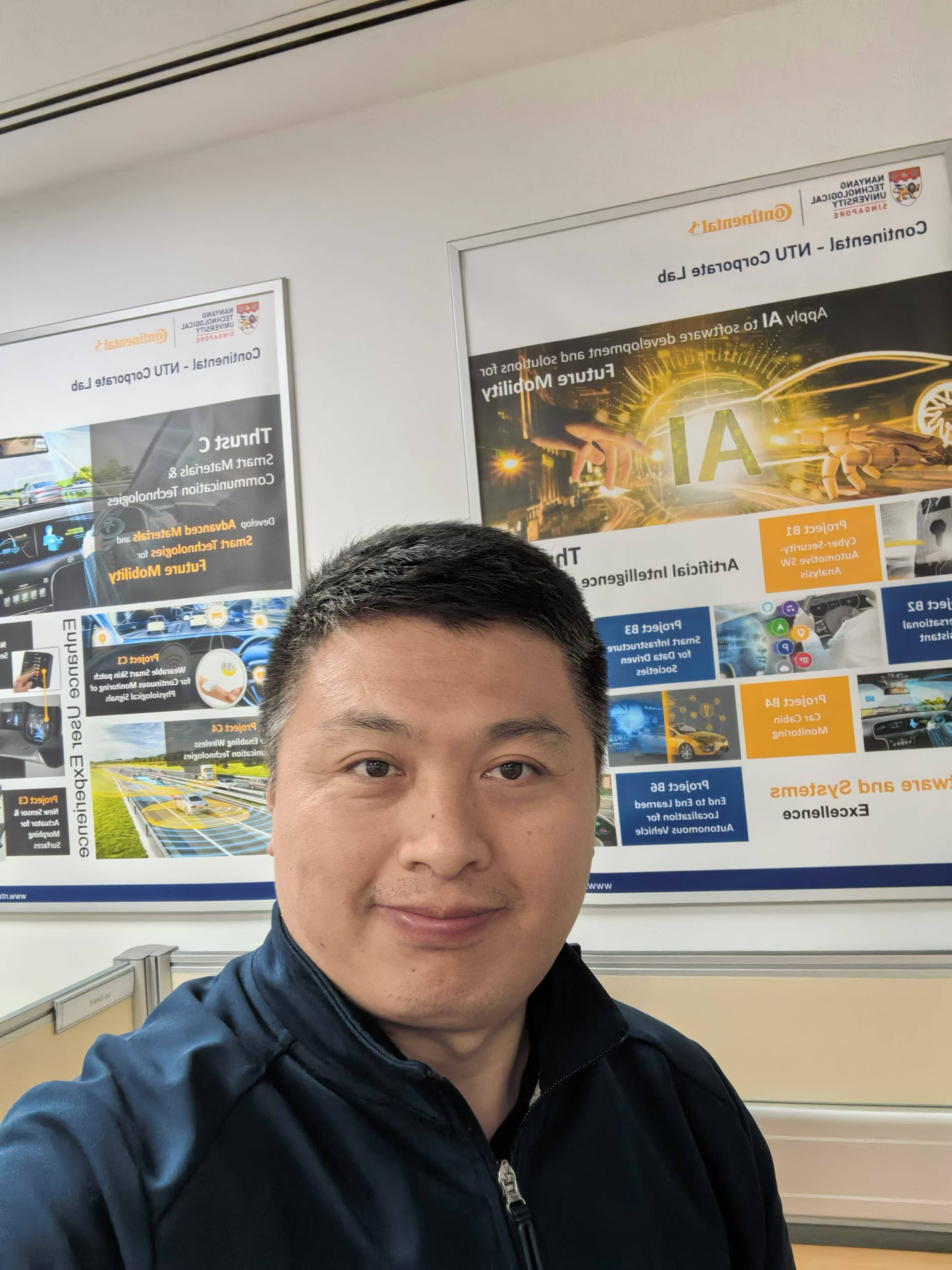
Jingquan Ge (葛景全)
About
I am now an Associate Professor (Research Track) at the School of Cyberspace Science, Harbin Institute of Technology (HIT), China. I am interested in all aspects of LLM and AI security, system and software security. My current research fields include the security issues of large language models themselves and the application of large language models in system and software security, root cause analysis of software bugs, vehicle system security, cache side channel attack and defense.
Email: gejingquan@hit.edu.cn
Education
B.S. in Communication Engineering, Ocean University of China. (Sep.2004-Jun.2008)
M.S. in Electronics and Communication Engineering, University of Chinese Academy of Sciences. (Sep.2013-Jun.2016)
Ph.D in Cyberspace Security, University of Chinese Academy of Sciences. (Sep.2016-Jan.2020)
Work experience
Jun.2008-Sep.2013: Freelancer
- Jan.2020-Jun.2022: Research Fellow
- Southern University of Science and Technology
- Duties included: Study on hardware and system security
- Jun.2022-Feb. 2026: Research Fellow
- Nanyang Technological University
- Duties included: Study on System and software security
- Mar.2026-present: Associate Professor (Research Track)
- Harbin Institute of Technology
- Duties included: Study on System and software security, LLM security and LLM-based security applications
Academic Services
Reviewer of The IEEE Transactions on Dependable and Secure Computing.
Program Committee Member for the 2026 IEEE International Conference on High Performance Computing and Communications (IEEE HPCC’26).
Reviewer of The IEEE Transactions on Big Data.
Program Committee Member for the 2025 IEEE International Conference on Ubiquitous Intelligence and Computing (IEEE UIC’25).
Reviewer of The Journal of Supercomputing.
Reviewer of Cybersecurity.
Program Committee Member for the 2022 IEEE International Conference on Ubiquitous Intelligence and Computing (IEEE UIC’22).
Reviewer of Journal of Systems Architecture.
Artifact Committee of the 2020 Annual Computer Security Applications Conference (ACSAC’20).
Skills
- Proficiency in linux kernel programming
- Proficiency in hardware programming
- Proficiency in ARM assembly programming
- Good at software and hardware co-design
- Proficiency in software analysis
- Proficiency in LLM-based security applications